


























Skepticism abounded at a public forum convened by Riverhead Town last night to discuss the Suffolk County Water Authority’s plan to run a 24-inch transmission line through the township to boost its supply to customers in the Town of Southold.
Town officials are unhappy with the role they’ve been assigned by the water authority in the review under the the State Environmental Quality Review Act.
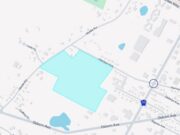
Riverhead Town challenged the water authority’s assumption of lead agency status for the review, arguing that the Town of Riverhead will bear nearly all the impacts of the transmission line construction — which will traverse the Town of Riverhead from Flanders to Southold Town, including along Sound Avenue from Northville Turnpike to the Southold Town line, and so should have the lead agency role. The first phase of the project calls for the installation of approximately 8.15± miles of 24-inch water main and the construction of a booster station on a 1.5-acre parcel owned by SCWA on Pier Avenue just north of Sound Avenue.
But the Commissioner of Environmental Conservation, who by law is vested with the authority to decide lead agency disputes, ruled against the town, stating that Riverhead will be an involved agency and will therefore have a seat at the table in the review process. However, the water authority did not designate Riverhead Town as an involved agency, diminishing its role in the review process.
In addition, environmental review documents prepared by the water authority state that activities associated with the pipeline are immune from local land-use review. The SCWA’s draft environmental impact statement for the project will evaluate this issue, the project’s scoping documents state.
Riverhead officials are worried about the impacts to Sound Avenue, which is heavily trafficked and has very narrow shoulders, Supervisor Tim Hubbard said in an interview last month. The work to open the road to lay the water main has the potential to cause major traffic backups, Hubbbard said.
The proposed transmission line is needed to bring drinking water to SCWA customers on the North Fork. SCWA officials say the project is a long-term solution to water supply issues in Southold, where infrastructure is under increasing strain during periods of peak demand.
Last night’s forum was held in advance of a public hearing scheduled during the upcoming Town Board meeting Tuesday evening. The board intends to apply the “Monroe Balancing Test” for the pipeline project. The test, named for a 1988 case decided by New York’s highest court, Matter of County of Monroe v. City of Rochester, In which the court introduced the “balancing of public interests” test to resolve intergovernmental land use conflicts. The Court of Appeals in Monroe articulated nine factors municipalities must weigh in deciding whether another governmental entity is immune from local regulation.
Under the Monroe test, an encroaching municipality must show that, on the balance of the nine factors, the proposed land by another municipality benefits the public.
Suffolk County Water Authority did not have representatives at the forum in Riverhead Town Hall last night, but will attend and participate in Tuesday’s hearing, according to a water authority spokesperson. The spokesperson declined further comment.
“I would say that the Town of Riverhead needs more participation in [the SEQRA review] process, initially identifying us as an interested agency, rather than involved agency, when so much of the project is going to affect the town of Riverhead, specifically, I think, is a major deficiency in the proposal that’s been put out there thus far,” Town Attorney Erik Howard said.
There is no benefit to Riverhead in having the transmission line come through the town, Howard said. “There are alternative paths that we think weren’t considered fully through the SEQRA process, and that would include taking the main down 25 — down Main road, rather than across Sound Avenue,” he said.
The Town Board during the hearing will hear from town planners and the town’s engineering consultant, and from the public, and it will weigh the Monroe balancing test factors with the information provided by the water authority and determine what local zoning and land use regulations the water authority will be subject to in proceeding with this project, Howard said.
The town may have to take the water authority to court to protect its interests, he said. “If we’ve made a determination that they need to apply for certain permits, and they commence work without getting those permits, …we would seek injunction with a temporary restraining order, and we would reference the town’s position that we should have been an involved agency, and also reference the Town Board’s, Monroe balancing test,” Howard said.
“In order for this to go forward, there would have to be a community benefits agreement,” Howard added. “And I don’t know exactly what that looks like, how much money that is, what other kinds of considerations go into that, but assuming that the project is going to go forward, we would be absolutely seeking that,” he said.
“I would just add we’ve been given very limited information on this project,” Riverhead Community Development, Planning and Building Administrator Dawn Thomas said. “So when you look at the map… it’s just a line on a map, so it doesn’t suggest or specify the depth of the pipe, or where they would lay it. It doesn’t say where in the right of way it would be …There’s no engineering that’s been done. And so even for us to properly assess the environmental impacts on the town, we really would need to know a lot of that detail, and it just isn’t available,” Thomas said.
The town’s environmental consultant Jeffrey Seeman elaborated. “Typically, when one looks at environmental impacts of a major project, a utility project of this magnitude, you have a preliminary set of plans that are presented along with the application or desire to construct, whereby those plans would show definitively where the wetland boundaries are, where the pipelines are, where the proposed 10-foot wide temporary construction easements would be,” Seeman said.
“With the information we’ve been given. We can’t even tell you whether you’re on the east of the west side of the street for this project, or the north or south side. So there’s virtually no information other than this line on a map, which makes, for me as an analyst, very difficult to determine what the impacts might be and also what they really should study in the scope, for example,” he said.
“We have mature trees along Sound Avenue. We don’t know whether or not those trees will be significantly impacted or marginally affected by this project,” Seeman said.
“I don’t know whether it will cross over to private properties, because they have provided us no tax map numbers for the entire route to see whether or not to avoid underground infrastructure — gas lines, existing water lines from our water district, drainage structures, or even what Riverhead may plan in the future for underground utilities along Sound Avenue — where those impacts could potentially occur,” he said. “We have been requesting that information, and we haven’t received anything yet, and to put it in the draft impact statement is a little late, to say the least,” Seeman said.
He said under SEQRA procedural guidelines, if it’s not clear whether an agency is an involved agency because it may have some approval requirements for a project, the agency is to be treated as an involved agency until it’s confirmed that the agency has no discretionary decisions to make. “It would be very difficult for me to accept that we’re not involved,” Seeman said, because all of the land that this will run through in Riverhead is owned by the town.”
Riverhead Water District Superintendent Frank Mancini raised questions about the long-term sustainability of the water supply, and the impacts of pumping 6,000 gallons per minute from a well in Northampton to serve the water authority customers in Southold. Mancini noted that irrigation restrictions are likely needed to conserve water for the future.
“Personally, I think this may be jumping the gun to commit —this is our last line of defense, the Central Pine Barrens and to commit to just going into it right away while we have this raging irrigation issue where 70% of the water we produce as drinking water suppliers is used for irrigating our lawns,” Mancini said. “I think we probably need to rein that in before we commit to large withdrawals for this. That’s only my personal opinion,” he said. “I think soon we’ll learn more about how the whole aquifer system works.”
Mancini said water suppliers in Suffolk have been working with the State Department of Environmental Conservation and the U.S. Geological Survey to define the freshwater and saltwater interface. Water suppliers, including the Riverhead Water District, have installed monitoring wells to monitor the movement of the interface,” he said. “I think there is a lot of water in Suffolk County. It needs to be managed properly. But personally, I think this may be jumping the gun.”
Southold Town Councilman Greg Doroski said Southold submitted six pages of questions to the Suffolk County Water Authority during the environmental impact scoping process.
“I’d just like to make the suggestion that the town boards coordinate, because… there is a fundamental question for us all to ask: whose water is this? They are taking water from Southampton, bringing it through Riverhead to serve Southold,” Doroski said.
“I have similar questions whether there’s capacity in that individual well [in Flanders] to supply the water that they say they need now and potentially in the future,” he said.
“And I think Mr. Mancini is spot on that we need to look at preservation measures. Southold Town Board recently enacted some restrictions on residential lawn irrigation, and I think this is another area we can look to potentially collaborate here and look at conservation, but also look at addressing the water authority as a unified front, so they engage with us as a unified front, and we can express our concerns as a unified front,” Doroski said.
Southold Town Supervisor Albert Krupski also attended and spoke at the forum.
“There’s been a lot of scientific work that’s been done recently that should be considered,” Krupski said. “There’s going to be one source to supply the whole North Fork, all of Southold Town, possibly the whole South Fork. I don’t know what the conditions of their supply wells are. There’s a finite amount of water. I don’t know who’s done the work to really determine is there enough water?”
Krupski asked whether the pipeline would have enough water to supply Riverhead.
“Is that a possibility, that this is one of the intentions, that when that water comes in, that there would be enough to supply Riverhead? “Southold is looking for some public benefit, because that’s what it really comes down to,” Krupski said. “There’s a lot of money that’s going to be spent here. It’s going to have a lot of long-lasting impacts, and I appreciate that you’re looking into retaining and maintaining Riverhead zoning and land use authority,’ he said. “That’s really important, that you’re not going to let any of that get eroded. So thank you for that effort.”
State Assembly Member Jodi Giglio (AD-2) said the proposed path of the transmission line “will really disrupt traffic and the lives of people that live and travel in the Town of Riverhead on Sound Avenue.”
Giglio questioned how many people the water authority is planning to serve with this extension.
“I think it’s really important that you work with the town of Southold and really get the answers to questions that were asked tonight and that have been asked all along as to what is the purpose of this and who is going to be served,” Giglio said.
Jamesport resident Barbara Blass said the water authority will need applications and permits that are outside of the zoning code that are discretionary on the part of the Town of Riverhead, including road opening permits, wetlands permits, excavation permits. Those are discretionary decisions, and the water authority made the assumption prematurely that Riverhead had no discretionary authority, and removed Riverhead as an involved agency and relegated us to as an interested party, Blass said.
“If you look carefully [at the Monroe balancing test factors], they talk about balancing for the good of the community, if you will,” Blass said. “There is no balance there whatsoever. There really isn’t. We are assuming and absorbing all of the impacts— eight point some-odd miles of open trenching, underground, all of that is within the Town of Riverhead and with no benefit [to Riverhead]. It’s hard for me to imagine that they could say, well, here’s your benefit, Riverhead. I’m waiting.”
Correction: This article was amended to correct a misstatement about the location of the Suffolk County Water Authority well that would serve the North Fork. The well is located in Northampton, not Flanders. Flanders is the location of a proposed interconnection to serve the North Fork pipeline.
The survival of local journalism depends on your support.
We are a small family-owned operation. You rely on us to stay informed, and we depend on you to make our work possible. Just a few dollars can help us continue to bring this important service to our community.
Support RiverheadLOCAL today.
