


























Last month, Riverhead Town posted the draft chapters for its new comprehensive plan, giving the public a glimpse into what the final plan might look like, and what possible changes to town policy could be coming down the road.
The plan’s importance cannot be understated: it will guide the town’s policy for the next two decades. Perhaps the most important part of the plan is guiding the town’s land use policies: how land should be used and what development should be allowed or prohibited, incentivized and disincentivized.
The new plan, specifically its final chapter on “future land use,” will guide the development of new zoning laws, which regulate what can be built, where it can be built and what that development should look like. The chapter has a lot to say about topics of interest to many, among them the future of industrial development, farmland preservation and housing.
The draft chapters are not final and the town is still receiving input from the public. The deadline for comments on the draft plan is Friday, March 15. Comments will be accepted by email to compplan@townofriverheadny.gov.
There will be more opportunities to comment on the document, including the mandatory public hearing the Town Board must hold before it can adopt the plan. The Town Board will also need to decide whether to act on changes outlined in the plan after it’s adopted. Those changes will require town code amendments, which will also be the subject of public hearings prior to adoption.
View or download the draft plan below.
The individual chapters can be downloaded separately on the town’s comprehensive plan website.
Highlights of the land use chapter:
Industrial development
Zoning for industrial development could undergo the most significant changes in the near future.
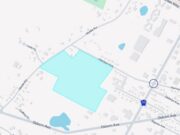
Most of the town’s undeveloped industrial land is in Calverton, along the south side of Middle Country Road (Route 25), outside of the Calverton Enterprise Park. The plan proposes rezoning the Industrial A and C zoning districts along Middle Country Road to a new zoning district called Calverton Industrial. The Calverton Industrial zoning district would limit development density and impose additional setback requirements and design guidance.
Uses of land in the Calverton Industrial district “would be based off of allowable uses” in the Industrial C zoning district. The district permits a litany of uses including warehouses, offices, laboratories, wholesale businesses, commercial sports and recreational facilities, and indoor manufacturing.
Land zoned for industrial development in other parts of Calverton would all be rezoned Light Industrial. Development density in the Light Industrial district would be more limited than what is currently permitted in that district.
Developers of projects in both the Light Industrial and Calverton Industrial districts would be able to purchase farmland preservation credits to increase the densities of their developments. The most significant bonus with this purchase would come in the Calverton Industrial district, where building could be up to 40 feet with the purchase of farmland preservation credits. “Allowing for slightly taller buildings can attract a wider range of businesses, including those that require more vertical space for advanced manufacturing, research and development, or storage facilities,” the plan says. The district should also include a “pyramid height law,” the plan says, which “limits the scale of a building as it approaches property lines.”
The town should define land uses that are not specifically defined in the zoning code, the plan says, such as agri-tourism, a banquet facility, a “non-nuisance industry,” and wholesale businesses.
However the plan is silent about the different types of modern warehouses, including logistics centers, which have different impacts on traffic, air quality and community character than “traditional” warehouses.
The plan does not address development of the town-owned land at the Calverton Enterprise Park, and recommends the town undertake a study of the land separate of the comprehensive plan.
“Recognizing the community’s desire for a collaborative planning approach, a comprehensive study involving residents, NYSDEC, and other stakeholders should be initiated,” the document states.
Farmland preservation
The draft plan offers a strategy to revamp an important farmland preservation tool: the transfer of development rights, or TDR, program.
The program allows developers to purchase development rights from “sending” areas such as farmland or open space, to redeem them for bonuses in designated “receiving” areas where development is incentivized.
The town’s current TDR program has long been considered ineffective. Reforming the program was a key reason why town officials decided to create a new comprehensive plan. The plan proposes increasing the number of both sending and receiving districts, and making credits more valuable to developers to encourage their purchase.
Sending areas would be expanded to include the RB-80 and RA-80, two residential districts which are located along stretches of Main Road and north of Sound Avenue. “[T]hese areas have some large tracts of agricultural lands that should be considered for preservation,” the plan says.
Outside of the Calverton Industrial and Light Industrial districts previously mentioned, the plan identifies the Planned Industrial Park zoning district — which governs the “industrial core” of the Calverton Enterprise Park — as a location for increased development densities with use of TDRs. The town would need to work with the state Department of Environment Conservation to change the comprehensive development plan for the industrial core properties, if the change were to occur.
The plan also identifies ways TDRs could also be used to expand uses outside of industrial districts.
Two major uses would be for tourism. Lodging for golfers or visitors located on a golf course, referred to in the plan as “golf cottages,” could be allowed with the use of TDRs. The other would be for agri-tourism resorts, which “should require a substantial redemption of TDR credits.” The town is currently considering a zoning code amendment to allow agri-tourism resorts north of Sound Avenue.
Residential developments could also receive a boost with a TDR revamp. Currently, town law says developers can only use TDR credits to increase housing density by a total of 500 units town-wide. The plan suggests that part of the Town Code be reviewed.
The town could also amend several zoning districts to allow more residential development with the use of TDR.
Development of apartment units in the Downtown Center-1 zoning district, which allows mixed use apartment buildings along parts of Main Street downtown, is currently capped by town law at 500 units. With development in that area nearly approaching that cap, the plan suggests allowing developments to exceed the cap with the use of TDR credits; the units over the cap “must be for homeownership opportunities or for age-restricted living.”
Other suggested changes would be allowing higher density for the creation of townhouses and garden apartments in the Peconic River Community zoning district, located along stretches of West Main Street in Riverhead, and the Commercial Residential Corridor zoning district, located along stretches of East Main Street and the eastern part of Route 58.
Expanded overlay districts
The plan proposes the creation of a new overlay district to enable the development of assisted living facilities. The zone would be located “within the boundaries of CR58, Middle Road, Northville Turnpike, and Osborn Avenue,” which would be near Peconic Bay Medical Center and medical offices. Supervisor Tim Hubbard has said there is interest from a developer to create an assisted living facility near Route 58.
The town has a Residence Retirement Community zoning district that allows assisted living communities, but only one area in the town has that designation and developers have been unsuccessful in lobbying town officials to rezone certain parcels for retirement community developments.
“This zoning change would provide for a mix of 1-,2-, and 3-story buildings in a compact campus-like environment that are built close together, so they are easier to access for pedestrians,” the plan says. “Residential density for these facilities should be capped, potentially at 30 beds per acre, provided sewer infrastructure is in place.”
The plan also suggests changing the Hospital zoning district. The zoning district applies to the site of the Peconic Bay Medical Center campus and was created to allow the hospital to build taller buildings than what was allowed under the previous zoning.
Since the zoning was adopted in 2016, PBMC has purchased the former McGann-Mercy High School campus adjacent to its hospital, vastly increasing its land and creating the potential for further expansions.
The plan says PBMC’s long-term plans include creating wellness-related retail and housing for its employees on the former Mercy campus. The plan recommends the zoning district be amended to permit fitness centers, wellness-related retail, health foods, physician offices and childcare, as well as housing for hospital staff.
PBMC’s long-term plans have yet to be revealed. The plan says that “any potential zoning changes would need to consider specific plans by Peconic Bay Medical Center once they are developed. Potential impacts would therefore be determined at a later point when specific zoning changes are proposed.”
Another overlay district touched on in the plan is the Community Benefits overlay district, which was established in 2016 to enable the creation of the First Baptist Church of Riverhead’s Family Community Life Center, a community center and an affordable housing development on Northville Turnpike.
The Family Community Life Center is working with developer Georgica Green Ventures on the project. They requested changes to the zoning district last June to enable the project. A key change would be allowing the subsidized housing at the site to be “low-income” rather than ““workforce.” Both are terms defined by the federal Department of Housing and Urban Development (HUD) according to area median income levels.
The town has yet to act on the Family Community Life Center’s requests, but the plan suggests that the district might be used as a “floating zone” — a conditional zoning district that would be unmapped. “The Town may reconsider the existing residential density cap of 10 units per acre, with the possibility of a higher density limit determined by the Town Board on a case-by-case basis. Factors influencing this decision include existing infrastructure, amenities offered, the quality of housing, and the overall site plan,” the plan says
New housing regulations:
The town’s current zoning regulations require that homes be at least 1,200 square feet in size in residential districts. The plan suggests possibly removing that requirement. “Eliminating such restrictions allows for greater flexibility in housing design, promotes innovation, and facilitates the development of diverse and affordable housing options that better meet the evolving needs of our community,” the plan says.
The plan recommends relaxing regulations on accessory dwelling units, which provide homeowners the option to build additional housing structures on their land. The current code mandates that those seeking to have an accessory unit approved have a certificate of occupancy for the accessory building for at least three years before its approval. “Originally intended to permit accessory units in existing buildings while discouraging new developments, this provision poses a burden on applicants,” the plan says. “A potential remedy could involve modifying the requirement to apply the 3-year CO period to the principal building rather than the accessory building.”
The town also seeks to amend chapters of the town code that deal with housing standards and rental units to align them with the New York State building codes. The proposal would also include a saturation limit for sober homes in the downtown area.
“Opportunities also exist to strengthen construction quality and sustainability standards, ensuring compliance with current codes and aligning with sustainability goals, detailed in the Sustainability and Resilience section,” the plan says.
The survival of local journalism depends on your support.
We are a small family-owned operation. You rely on us to stay informed, and we depend on you to make our work possible. Just a few dollars can help us continue to bring this important service to our community.
Support RiverheadLOCAL today.
