























The Riverhead Town Board has scheduled a public hearing for Nov. 6 on a proposed local law that would allow the town to pierce New York State’s property tax cap next year.
Under state law, a town board must first adopt a local law before approving a property tax levy increase that exceeds the state-imposed limit. Holding a public hearing is part of that process.
Since 2012, New York has limited annual municipal property tax levy increases to 2% or the rate of inflation, whichever is lower, with some minor adjustments for things like new construction, pension cost increases, and certain capital expenses.
The first step in setting next year’s property taxes is deciding how much money the town needs to raise — that’s the tax levy. Once the levy is set, the town figures out the tax rate, which translates that total amount into what each property owner will owe based on the assessed value of their property.
MORE COVERAGE: Riverhead’s 2026 tentative budget calls for town wide tax rate increase of 6.74%
The proposed rate — and what it really means
For 2026, the town’s proposed tax rate is $71.549 per $1,000 of assessed value, up from $67.01 this year — a 6.74% increase.
That does not mean homeowners’ tax bills will rise by 6.7% based on their home’s market value. Property taxes in Riverhead are based on assessed value, not what a house would sell for on the open market.
Because Riverhead’s equalization rate — the ratio of assessed value to market value — is just 8.16%, homes here are assessed at roughly 8 cents on the dollar of market value.
For example, a home with a market value of about $500,000 has an assessed value of roughly $40,700. At the proposed 2026 rate, that homeowner would pay about $2,910 in town taxes, compared with about $2,725 this year — an increase of around $185.
How the property tax system works
Understanding the proposed increase requires a quick look at the terms local governments use when setting budgets and tax bills.
Tax levy
The tax levy is the total amount of money the town needs to raise through property taxes to fund its annual spending plan. It’s set by the Town Board when it adopts the budget.
Tax rate
The tax rate is how the levy is divided among property owners. It’s the amount of tax charged per $1,000 of assessed value.
Think of the levy as the size of the pie the town needs to bake, and the tax rate as how big each slice must be to add up to that total.
Assessed value
The assessed value is the number assigned to your property for tax purposes by the town assessor. It represents a percentage of market value, not the full price your home would sell for. Because Riverhead hasn’t conducted a townwide reassessment in decades — typical for many Suffolk County towns — assessed values lag far behind current market prices.
Equalization rate
Each year, the New York State Office of Real Property Tax Services calculates an equalization rate for every municipality to show how its assessed values compare with real market values.
A rate of 100% means assessments equal market value. Riverhead’s rate of 8.14% means properties are assessed at about 8% of their current market value. Equalization rates let the state — and taxing entities such as school districts and the county — compare property values fairly across towns that assess differently.
Why it matters
Understanding how the tax levy, tax rate, and equalization rate work together helps residents make sense of what “piercing the tax cap” really means — and how changes in the town budget translate into dollars on next year’s tax bill.
It’s important to remember that the total town-wide tax is only a portion of the property tax bill. In addition to the town-wide tax, a property tax bill includes the town’s special district taxes (garbage district, water district, sewer district, ambulance district, parking district) as well as taxes collected by the town for other taxing entities, including the fire district and the school district in which the property is located and Suffolk County. The school district portion of the tax bill represents about 56% of the total property tax bill, according to the the the supervisor’s budget presentation.
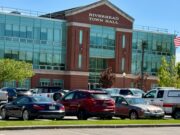
The hearing on the proposed local law concerning the tax levy is scheduled for Thursday, Nov. 6 at 2 p.m. at Riverhead Town Hall, 4 West Second Street, Riverhead.
Correction: This article was amended after its original publication to correct an error in the equalization rate reported. It is 8.16%, not 8.14% as originally stated.
The survival of local journalism depends on your support.
We are a small family-owned operation. You rely on us to stay informed, and we depend on you to make our work possible. Just a few dollars can help us continue to bring this important service to our community.
Support RiverheadLOCAL today.
